
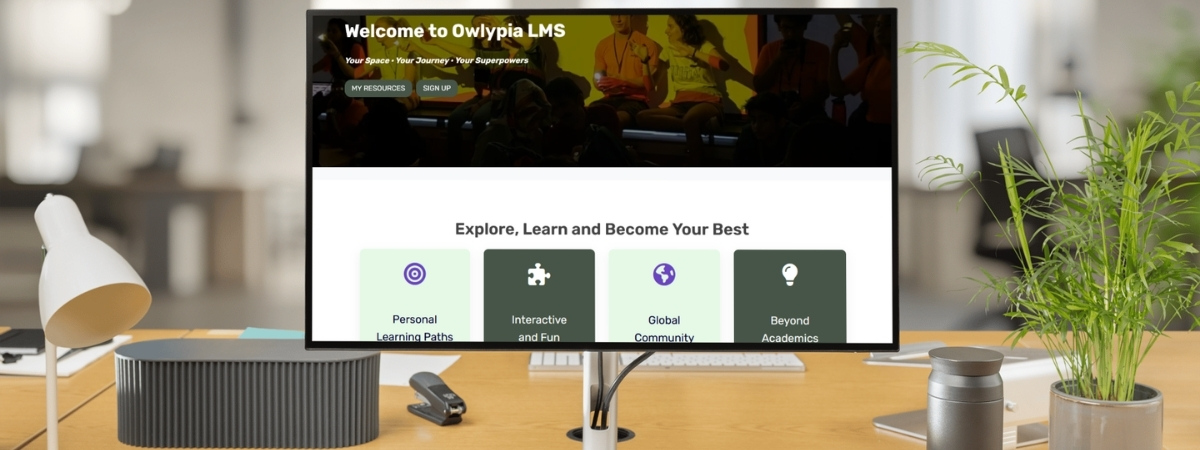
Maximizing Education Resources with Owlypia
How to reach educational resources with Owlypia
The robust, diverse library is often a beating heart of any educational initiative and offers a gateway to perspectives and observations over the immediate experience of students. The extensive collection of books, films, articles and other Owlypia media fulfils this role and provides a constantly developing set of resources that can enrich lessons, evoke debates and instil love for constant learning. The question then is: How can teachers and students maximize this treasure to ensure that it leads to deeper involvement and understanding?
How Owlypia organizes its resources
One of the simplest strategies is purposeful curation. Owlypia organizes its resources around the topics relevant to its competitions such as history, literature, science, ethics and technology. Rather than random materials being chosen, teachers can plan structured "reconnaissance units". For example, if the topic is "technology and society", the teacher can assign a short document from the Owlypia library that examines the rise of artificial intelligence, pair with an opinion on automation and wrap with a historical novel that shows the last industrial revolution. By connecting these diverse resources, students see this topic from more angles.
Another advantage of the diversity of Owlypia sources is the opportunity for personal learning. Each student comes with different preferences and styles of learning. Some are doing visual material; others prefer text analysis and others still absorb sound means. Owlypia offers several books, videos and articles ensuring that students can find the resources that resonate with them. Teachers can encourage individuals or small groups to choose items that arouse their interest and then facilitate sharing of sessions where each group represents keyways. This approach supports both the choice and responsibility, because the students have to prove what they have learned from their chosen media.
The key to maximizing any educational source with Owlypia
Active involvement is the key to maximizing any educational source and Owlypia materials are no exception. Simply assigning a movie you can view, or chapter can bring passive consumption if it is not paired with sophisticated activities. Educators can turn reading into an interactive experience by asking students to create reading protocols, emphasize provocative citations, or ask open questions for class discussions. Movies and documents can be dissected through guided protocols: Before pressing "Play", teachers can provide a set of focus questions or ask students to notice repeating topics, character motivation or visual stimuli. During or after screening, group discussions and reflective essays can convert passive monitoring into critical thinking.
The digital nature of the Owlypia library also allows cooperation and immediate feedback. Students can publish initial reading responses to the online forum and trigger asynchronous conversations that exceed the time limitations of one class period. Teachers may ring to redirect or deepen the dialogue, emphasize nuance points, or call on too much simplified conclusions. This interactive process changes the library of resources into a living ecosystem, where ideas develop more through municipal efforts rather than from static or one -dimensional stay.
Finally, Owlypia sources can serve as excellent reflective stones for creative projects. Students can use library material as a springboard for writing short stories, filming their own documents or designing interactive presentations. For example, the classroom could together read a historical description of a large event and watch a related film and then create several podcasts offering modern parallels or alternative perspectives of this matter. By transforming consumption into production, students develop higher order thinking and a sense of ownership of their work.
In short, an extensive library of books, films, articles and others is the golden missing to explore. Effective curator, personalized selection, active wiring, digital cooperation and creative applications are the paths to unlock the potential of the library. When these sources can wisely take advantage they can illuminate academic concepts, focus critical thinking and support lifelong passion for discovery. The platform thus becomes more than just a repository of documents - it becomes leadership, thanks to which pupils connect dots between theory and reality and eventually enrich their educational path in an innumerable way.


Leave a Comment